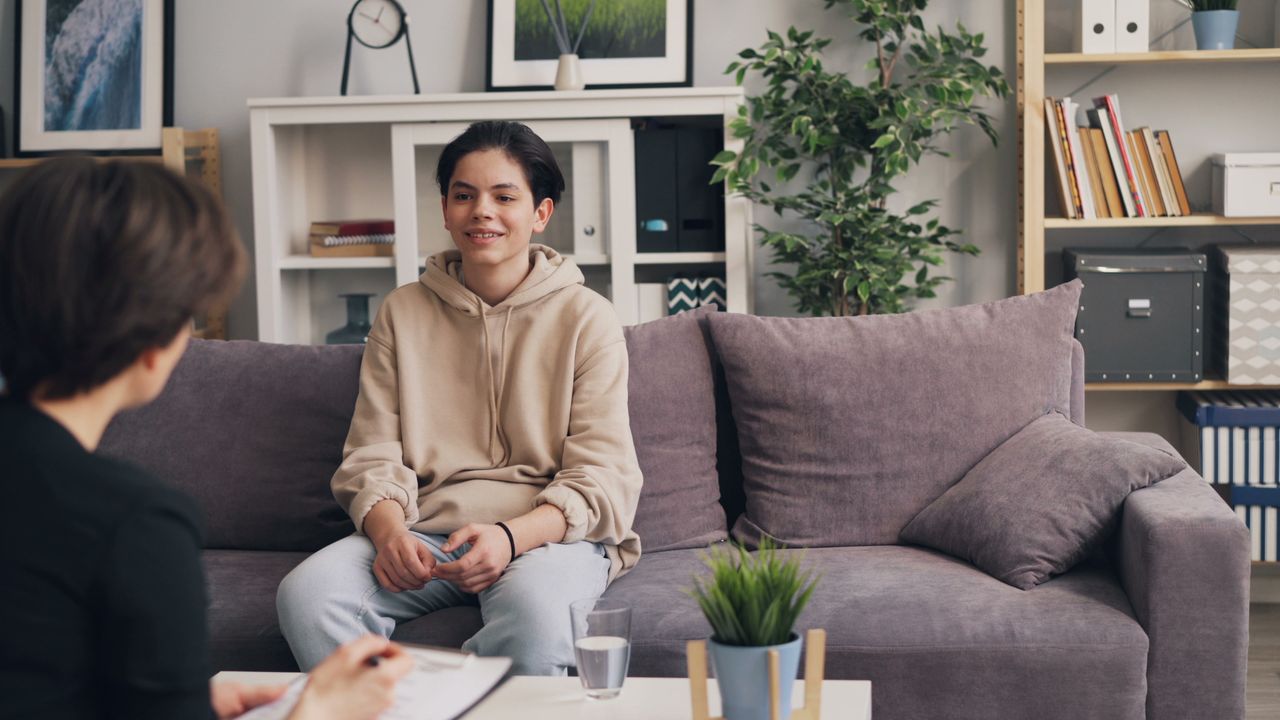
Psychological therapy in Brookvale, Northern Beaches, and via telehealth

Taking the step to start therapy can feel significant. Whether you have a clear goal in mind or simply feel that something isn’t quite right, individual therapy offers a warm, collaborative, and non-judgemental space to slow down and make sense of what you’re experiencing.
Sessions provide neuroaffirming therapy for children, adolescents, and adults, for those experiencing anxiety, OCD, low mood, low self-esteem, and life changes. Post diagnostic support following an autism, ADHD, or AuDHD assessment is also available.
PROVIDED BY

Jessica Radovan, Clinical Psychologist and AHPRA Board-Approved Supervisor

Who it’s for

Children, adolescents, young adults, and adults

SESSION LENGTH

50-minute individual sessions, weekly or fortnightly to start

Where

In person at 324/20 Dale Street, Brookvale NSW, or telehealth Australia-wide

The basics

What is psychological therapy?

Therapy is a regular one-on-one session with a clinical psychologist, usually 50 minutes, where you talk through what’s going on and work out what to do about it. There’s no script, most of it is a conversation.
Early sessions focus on understanding the situation properly: what’s happening, how long it’s been going on, and what you’d like to be different. From there the work moves to practical skills, drawn from Acceptance and Commitment Therapy (ACT), Cognitive Behavioural Therapy (CBT), and Interpersonal Psychotherapy (IPT), chosen to suit you rather than applied as a fixed program.
Sessions often start weekly or fortnightly, then space out as things settle. Some people come for a handful of sessions with a specific goal. Others stay longer. Both are entirely normal. For younger children, parenting support often runs alongside.
Therapy for children, teens, and adults by psychologist Jessica Radovan in Brookvale, Northern Beaches, Sydney
The aim isn’t to fit you into a framework. It’s to understand what’s actually going on, then build from there.
Where to start

Is therapy right for you?

People seek psychological support for all sorts of reasons. You might consider reaching out if any of these feel familiar.
  • Anxiety, panic, or worry that won’t switch off, or obsessive-compulsive patterns (OCD) taking up more of your day than you’d like.
  • Low mood, flatness, or a sense that you’ve lost interest in things that used to matter.
  • You’re seeking greater self-understanding as a neurodivergent person, or navigating life as an Autistic or ADHD individual in an environment that doesn’t always accommodate you.
  • Something significant has changed: a health condition, a relationship, a move, a job, or a loss.
  • Ongoing stress or burnout has built up to the point where the usual coping strategies aren’t working.
  • You’ve sought help before and left feeling rushed, misunderstood, or handed an explanation that didn’t fit.
Therapy for children, teens, and adults by psychologist Jessica Radovan in Brookvale, Northern Beaches, Sydney
What therapy offers

How therapy can help

Therapy is a shared, collaborative process tailored to your unique context, rather than fitting you into a rigid framework.
After a diagnosis

Post-diagnostic support

Helping you make sense of your or your child’s neurodivergent identity.

Receiving a diagnosis of neurodivergence can be a significant moment, often bringing clarity, understanding, and fresh questions all at once. There can be many emotions to work through, too.
Post-diagnostic support is the step that follows an autism assessment, ADHD assessment, AuDHD assessment, or psychoeducational assessment. A report and a diagnosis answer the question of what’s going on. Post diagnostic sessions are about how to make sense of your neurodivergent identity and develop practical tools. It’s available whether the assessment was completed here or elsewhere, and can help with:
The process

How sessions work

There’s no fixed number of sessions to commit to. The shape is straightforward: understand what’s going on, agree on what you want to shift, build the skills, then review how they’re holding up in real life.
Therapy is available for children, adolescents, and adults, in person in Brookvale or via telehealth anywhere in Australia. For younger children, parents and carers are usually involved, and parenting support is available alongside as a separate service.
Therapy for children, teens, and adults by psychologist Jessica Radovan in Brookvale, Northern Beaches, Sydney
Common questions

Therapy FAQs

Therapy is a regular one-on-one session with a clinical psychologist, usually 50 minutes. Early sessions focus on understanding what’s going on and what you’d like to be different. From there the work moves to practical skills drawn from ACT, CBT, and IPT, chosen to suit you rather than applied as a fixed program.

Sessions are provided by Jessica Radovan, a Clinical Psychologist with 20 years of experience across private practice, hospitals, schools, and non-government organisations in Australia and the UK, with particular depth in neurodivergence, anxiety, OCD, and mood.

No referral is needed to book therapy. If you’d like to access a Medicare rebate, a GP can provide a Mental Health Treatment Plan and referral. See the FAQs page for current fees and rebate details.

Standard individual therapy sessions run for 50 minutes. Session frequency is worked out together, and often begins weekly or fortnightly before spacing out over time.

Yes. Sessions are available in person in Brookvale, and via telehealth anywhere in Australia. Telehealth works well for many people, particularly where travel, work, or sensory factors make attending in person harder.

The first session is mostly about getting a clear picture: what’s brought you in, what’s been happening, and what you’d like to be different. There’s no pressure to have it all articulated beforehand.

Yes. Individual therapy is available for children, adolescents, and adults. For younger children, parents and carers are usually involved in the work, and parenting support is available as a separate service.

Yes. This is what post-diagnostic support is for. It focuses on understanding your neurotype, managing energy and burnout, unpacking masking, and building practical strategies for daily life.
OTHER services